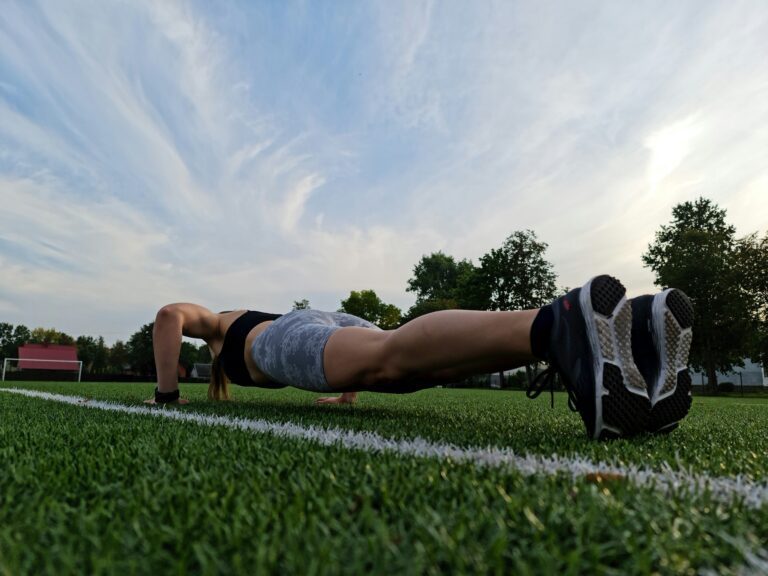
Looking for the best push-up variations for your chest, triceps, shoulders or core? The standard push-up is an excellent starting point, but changing your hand position, body angle or movement speed can change the challenge. This guide covers 15 variations, explains which muscles they emphasise and shows how to choose the right ones for your level.
Which push-up variation works which muscles?
Every push-up trains several muscles together. Changing hand position, body angle or tempo can shift the emphasis, but it cannot isolate the “inner” or “outer” chest. Use this guide to choose variations that suit your strength and goals.
| Variation | Main emphasis | Level |
|---|---|---|
| Incline | Chest, triceps, shoulders with reduced load | Beginner |
| Standard | Chest, triceps, front shoulders, trunk stability | Intermediate |
| Wide-hand | Chest emphasis; shoulder comfort varies | Intermediate |
| Close-grip / diamond | Triceps and pressing strength | Intermediate–advanced |
| Decline | Shoulders and upper-chest region | Intermediate–advanced |
| Pike | Shoulders and triceps | Intermediate–advanced |
| T / staggered | Core control and asymmetric stability | Intermediate–advanced |
| Archer / one-arm | High unilateral pressing demand | Advanced |
| Explosive / clapping | Upper-body power | Advanced |
15 push-up variations and how to perform them
1. Standard push-up
Works: Chest, triceps, front shoulders and trunk. Start in a plank with hands around shoulder width or slightly wider. Lower with control, elbows angled comfortably rather than flared straight out, and press up. Keep your hips from sagging. Best for: Building a foundation.
2. Wide-hand push-up
Emphasis: Chest. Move your hands moderately wider than shoulder width, keeping the movement pain-free. Avoid excessively wide placement: it can limit range and irritate some shoulders. Best for: Adding variety once standard push-ups feel comfortable.
3. Close-grip push-up
Emphasis: Triceps alongside chest and shoulders. Place your hands closer than usual, keeping wrists comfortable and elbows relatively near your sides. Best for: Increasing the challenge to your triceps.
4. Diamond push-up
Emphasis: Triceps. Bring hands close so thumbs and index fingers nearly meet; a perfect diamond shape isn’t essential. If your wrists object, widen the hands or use handles. Best for: Experienced exercisers seeking a tougher close-grip variation.
5. Decline push-up
Emphasis: Front shoulders and upper-chest region. Put your feet on a low, stable step and hands on the floor. Start with modest elevation and avoid arching your lower back. Best for: Progressing beyond standard push-ups.
6. Incline push-up
Works: The same principal pushing muscles with less bodyweight load. Place hands on a stable counter, bench or wall; keep your body aligned and lower toward the surface. Lower the hand support as you get stronger. Best for: Beginners and building quality repetitions.
7. One-arm push-up
Emphasis: One-sided pressing and anti-rotation strength. Widen your feet for stability, place one hand under your upper body and keep your torso as controlled as possible. Progress through incline one-arm work or assisted versions first. Best for: Advanced strength goals.
8. Explosive push-up
Emphasis: Upper-body power. Lower under control, then push up as quickly as possible; the hands may briefly leave the floor. Start with a raised surface if needed and land softly. Best for: Power training after establishing a solid strength base.
9. T-push-up
Emphasis: Shoulder stability and rotational trunk control. Perform a push-up, rotate into a side-plank position and extend your top arm upward. Alternate sides, keeping the movement deliberate. Best for: Combining pressing with core control.
10. Staggered push-up
Emphasis: Asymmetric shoulder and trunk stability. Place one hand slightly ahead of the other and complete controlled repetitions, then swap positions. Best for: Introducing a manageable uneven-load challenge.
11. Archer push-up
Emphasis: Side-to-side pressing strength. Start with a wide hand position, shift your weight toward one bent arm while the other stays more extended, then return to centre. Use a raised surface to learn the movement. Best for: Progressing towards one-arm push-ups.
12. Hindu push-up
Emphasis: Shoulders, chest and triceps through a flowing movement. From a hips-high position, sweep your chest forward and up, then return smoothly. Keep the range comfortable for your shoulders and back. Best for: Variety and controlled movement through a larger range. Curious about the tradition? Read the history of the push-up.
13. Pike push-up
Emphasis: Shoulders and triceps. Begin with hips raised in an inverted V, bend your elbows to lower your head toward the floor in front of your hands, then press back up. Best for: Developing vertical pressing strength.
14. Clapping push-up
Emphasis: Explosive pressing power. Perform an explosive push-up, clap quickly while airborne and land with soft elbows. This is a more demanding version of the explosive push-up, not a separate muscle-targeting exercise. Best for: Well-prepared advanced trainees.
15. Fingertip push-up
Emphasis: Finger and forearm loading in addition to normal pushing muscles. This is a high-stress skill, not necessary for general strength. Progress cautiously from supported holds if you have a specific reason to train it; skip it if you have hand or wrist discomfort. Best for: Specialist grip-conditioning goals, not beginners.
Choose variations by goal
- New to push-ups: Wall and incline push-ups; progress to standard push-ups.
- More chest and pressing strength: Standard, moderately wide-hand and decline variations.
- Triceps: Close-grip or diamond push-ups, using a comfortable wrist position.
- Shoulders: Pike and decline push-ups.
- Core control: Standard, staggered and T-push-ups. See Do Pushups Strengthen Your Core?.
- Power: Explosive push-ups after you can perform controlled standard repetitions.
Push-ups are primarily a pushing exercise. Include rows, pull-ups or resistance-band pulling, plus leg training, for a balanced programme. Read how push-ups relate to posture for more context.
A simple progression for beginners and experienced exercisers
| Experience | Example workout |
|---|---|
| Beginner | 2–3 sets of 5–10 incline push-ups, stopping before form breaks down |
| Intermediate | 2 sets of 6–12 standard push-ups, then 1–2 sets of 5–8 close-grip or staggered push-ups |
| Advanced | 3 sets of 5–10 decline or archer progressions, followed by 2 sets of 3–5 controlled explosive repetitions |
These are examples, not requirements. Rest between sets as needed, and allow recovery between hard sessions. Add repetitions or difficulty gradually rather than changing every variable at once. For a structured approach, start with the Hundred Pushups Initial Test and follow the six-week Hundred Pushups programme.
Common mistakes to avoid
- Choosing a harder version too early: Progress only when you can control the easier version.
- Letting the hips sag: Brace your trunk and shorten the set when alignment deteriorates.
- Forcing hand positions: Wrist and shoulder comfort matter more than an exact grip width.
- Rushing repetitions: Use a controlled lowering phase for strength work; reserve fast reps for deliberate power sessions.
- Ignoring pulling exercises: Pair push-ups with rows or similar movements.
Frequently asked questions
Which push-up is best for chest muscles?
Standard push-ups are an effective starting point. Moderate changes in hand width and body angle can shift loading, but no variation isolates an “inner chest” muscle.
Which push-up variation targets the triceps?
Close-grip and diamond push-ups can increase triceps demands. Use a hand position your wrists tolerate.
Are incline push-ups too easy to be effective?
No. They let you practise full-range, controlled repetitions and adjust difficulty by changing the height of your hand support.
Can I do different push-ups every day?
You can vary your training, but challenging sessions need recovery. Two or three well-spaced sessions a week can be a practical starting point.
Do push-up variations work the back?
Back muscles help stabilise the body, but push-ups do not replace pulling exercises such as rows.
Final thoughts
The best push-up variation is the one that challenges you while allowing consistent, pain-free technique. Start with a level you can control, choose variations that fit your goals and progress over time. If you’re working towards a bigger repetition goal, the Hundred Pushups training plan gives you a clear place to begin.